
As Gujaratis, we have kadhee once a week. It is sweet, sour, and spicy. This delicious soup is made in many different ways in different regions of India.
My mom always said, “The key to a good soup is the gram flour.” For some reason, her soup tasted the best, but it curdled, and she would blame it on the gram flour, a.k.a. besan.
I eat khichdee with kadhee. Sometimes, I drink it by itself too.
DH does not drink or eat it. DD, not yet.
So what’s all the fuss with this soup?
It is great for cold weather and sick people.

Gujaratis add jaggery, a.k.a. molasses, to all their food to achieve a perfect balance of sweet, sour, and spicy flavors. The kadhi follows the same rule.
try this recipe for it; it is the easiest and simplest: https://www.cookshideout.com/coconut-milk-kadhi-recipe
The unique feature of Gujarati kadhi is that it is made from buttermilk, which makes it more watery and soup-like in consistency. I have stopped having kadhi made with yogurt since, as a Jain, mixing yogurt with besan is against Jain rules of eating.
My favorite coconut milk in a can is the Native brand. It is organic and has the fewest additives. Check this out for more information: https://healthyeater.com/coconut-milk.
Feel free to make yogurt with the recipe below and enjoy it, just not as kadhi.
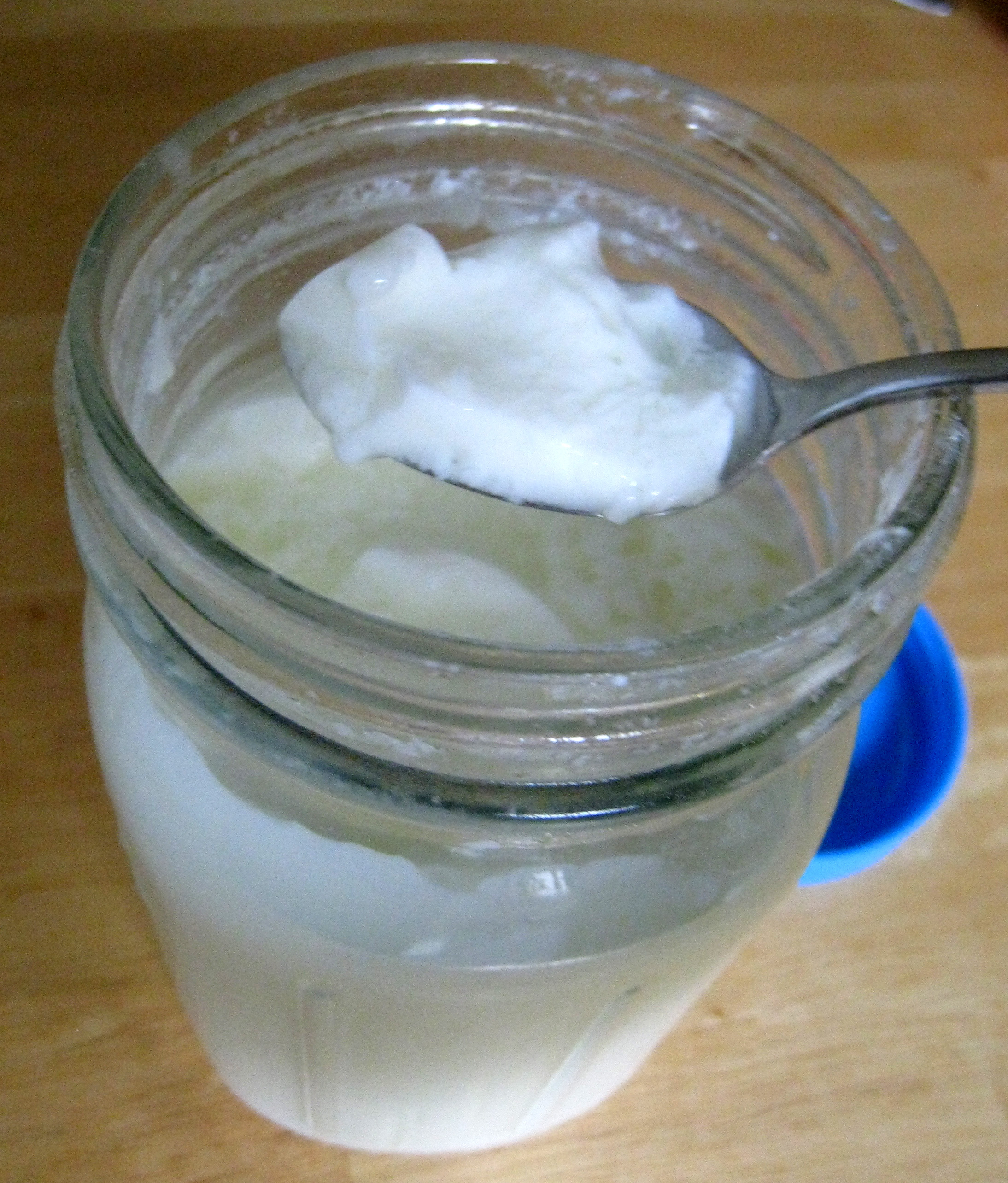
Homemade yogurt:
Mom has been making yogurt for the last 50 years. Dad needs fresh yogurt every day. Mom boils the milk, lets it cool down, and then adds the starter yogurt from yesterday’s yogurt. It ferments overnight and is ready for use the next day.
Benefits of homemade yogurt:
- Fermented and so has probiotics, which promote healthy gut flora.
- All the nutrients present in milk also occur in yogurt: Calcium, vitamins A, Vitamin B, phosphorus, and potassium. Milk from grass-fed cows has high amounts of CLA [conjugated linoleum acid].
Why not commercial yogurt?
- Commercial yogurt is fermented for a short time, sometimes just an hour! so the benefits in terms of
- Easily accessible nutrients are lost.
- It is not as easy to digest since, not much time for breakdown of lactose and casein.
- Probiotic bacteria are not in sufficient strength to impact gut flora
- Commercial yogurt may have many additional ingredients which may not be healthy, e.g., sugar, pectin, and others.
I make yogurt in the instant pot. I use nonhomogenized, organic, grass-fed milk. I boil it, then let it cool, and then add the culture, usually store-bought organic plain yogurt, and then put it in the instant pot: yogurt functions for 8 hours. Once it is formed, I let it sit on the kitchen counter for another 4-6 hours to sour it a little. It is more watery than store bought yogurt, I like it that way. You can strain the whey out, mind you, it is sweet whey and has a high protein content and high bacteria count as well. So use it, do not throw it away. Commercial whey protein is made from that fluid.
For 3.5 cups of milk, I use 2 tablespoons of starter culture yogurt.
Once you have your yogurt, homemade or store-bought, mix 1 cup of coconut milk with 2 cups of water and 1/4 cup of gram flour. Add salt and jaggery to taste. Heat until it boils once, then lower the heat so it is simmering. Add tadka. It is ready to serve with cilantro garnish.
Tadka: Heat 1 tablespoon of ghee (you can use coconut oil or any other oil except olive oil for this). Once the ghee is hot, add a pinch of cumin seeds, wait till they crackle, add a pinch of turmeric powder, add 6-8 curry leaves, add grated ginger, cut it into 1/2 inch pieces, and then add it to the yogurt mixture. Some folks add cloves, cinnamon sticks, and dried red chili to make it spicy.
Curry leaves, a.k.a. kadi patta, has many benefits. Check here for more information.

DD helps me make buttermilk. She has yet to develop a taste for it. I can’t wait for my parents to come in the summer and introduce her to this amazing soup.
Do you have any favorite winter soup recipes you would like to share?
Do you make yogurt soup a different way? If so, please share.

 Life, a daily exploration